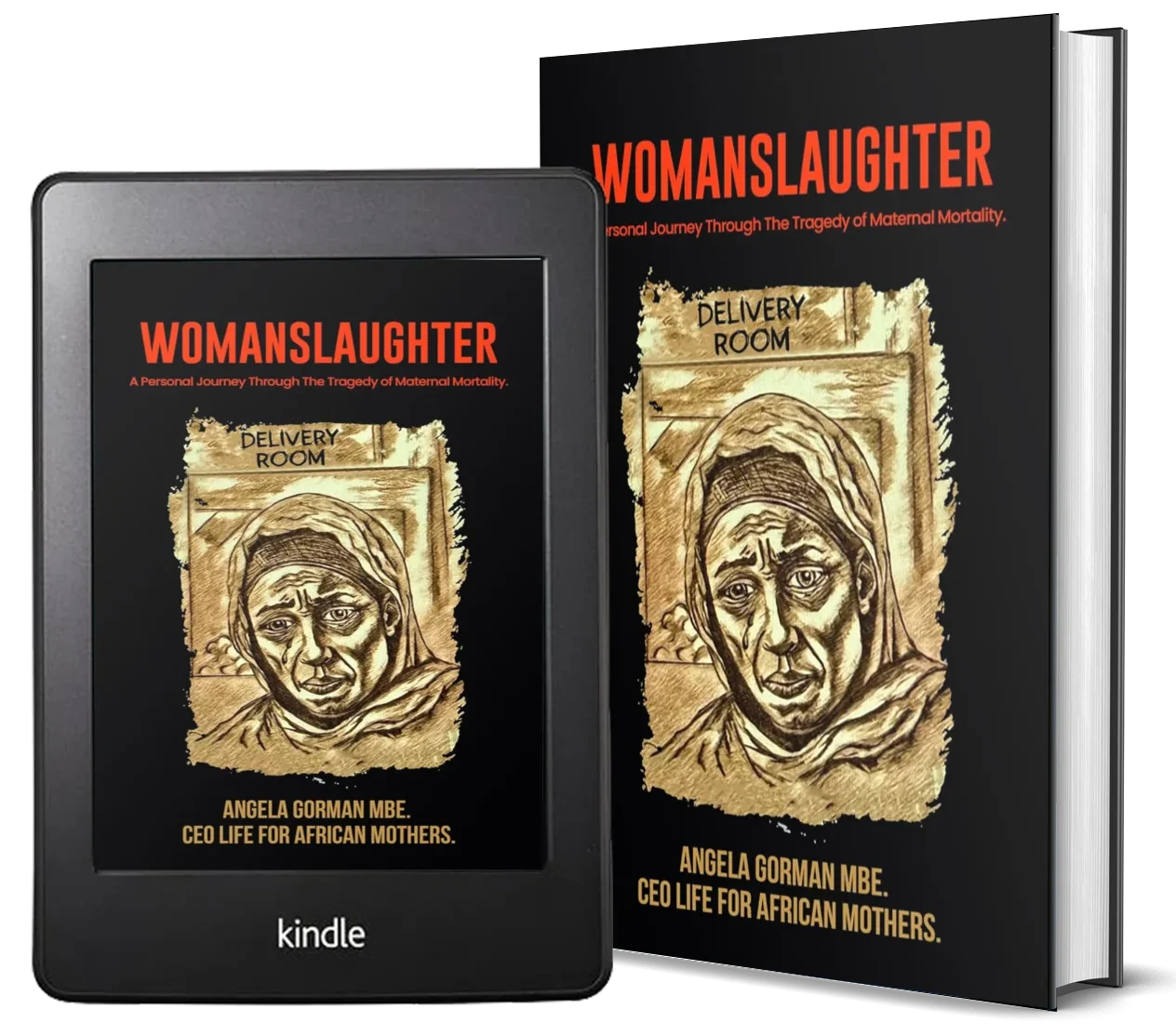
Every maternal death leaves more than an empty hospital bed. It can leave a newborn without nourishment, children without their primary caregiver, a partner without support and an entire family facing grief and uncertainty. In WOMANSLAUGHTER: A Personal Journey Through The Tragedy of Maternal Mortality, Angela Gorman, MBE, confronts this devastating reality through a memoir shaped by personal loss, clinical experience and two decades of humanitarian action.
The book begins with a moment that could easily have passed unnoticed. In 2005, Angela was 57 years old and working as a senior neonatal intensive care nurse. After a demanding shift, she watched the BBC Panorama documentary Dead Mums Don’t Cry. The programme showed women in Chad dying from pregnancy and childbirth complications because hospitals lacked medicines and resources commonly available in wealthier countries.
Angela did not simply watch and move on. She opened her laptop and wrote an email. That small act became the first step in a mission that would take her into hospitals, communities, government offices and maternity wards across Africa.
What makes WOMANSLAUGHTER so powerful is its refusal to reduce maternal mortality to a distant statistic. Angela describes women labouring in darkness, midwives caring for several patients at once, families searching for money before treatment could begin and hospitals operating without sufficient medication, gloves, electricity, oxygen or sterile equipment.
These women were not dying because medicine had no answers. In many cases, they were dying because the answers were unavailable, unaffordable or delivered too late.
The memoir also reveals the wider consequences of this failure. When a mother dies, her baby may lose its primary source of nutrition and care. Older children may be removed from school, while girls can be expected to take responsibility for younger siblings. Poverty deepens, opportunities disappear and the damage extends far beyond the delivery room.
Yet Angela’s account is not entirely defined by loss. It also documents what becomes possible when determination is matched with practical support. Through the organisation that became Life for African Mothers, Angela helped provide lifesaving medications, arrange professional training, build partnerships and connect healthcare teams with donors and international organisations.
After medication was supplied to a hospital in Chad, Angela received a report estimating that approximately 25 women who might previously have died each month were now surviving. The hospital’s newborn mortality rate was also reported to have fallen from 23 percent to 7 percent.
Across its 20 years of activity, Life for African Mothers contributed more than six million Misoprostol tablets across all or part of seven countries. Angela estimates that around two million women received the medication free of charge.
At the heart of the memoir is an intimate family connection. Angela’s paternal grandmother, Hannah Granville, died in 1915 following premature labour and catastrophic postpartum haemorrhage. Years later, Angela realised that she had devoted much of her humanitarian work to preventing the same condition that had taken her grandmother’s life.
WOMANSLAUGHTER is therefore more than a record of injustice. It is a tribute to forgotten mothers, a challenge to global indifference and evidence that meaningful change can begin when one person refuses to accept preventable death as inevitable.
Angela Gorman gives a voice to the mothers the world has failed and reminds readers that their lives, families and futures should never have been treated as expendable.